Currently Empty: ₦0.00


A successful WordPress website starts before you install a theme or choose colours. First decide who the site is for, what you want visitors to do, which pages they need, and what content will help them trust you. This beginner-friendly blueprint takes you from a rough business idea to a clear plan you can build yourself or hand to a website designer.
By the end, you will have a one-page website brief, a simple sitemap, a homepage outline, a content checklist and a seven-day action plan. You do not need coding knowledge to complete the planning work.
Key Takeaways
- Begin with one audience, one business goal and one main visitor action.
- Plan the pages and content before choosing a theme or page builder.
- Write each page around the visitor’s questions, not only your company history.
- Design for mobile screens, clear navigation and fast decisions from the beginning.
- Collect real proof and information; never invent testimonials, results or credentials.
Define the job of your website
A website cannot do everything equally well. A training academy, fashion store, consultant and local restaurant need different visitor journeys. Write one sentence that explains the website’s main job.
Use this formula:
This website helps [specific visitor] understand or obtain [specific offer] and encourages them to [main action].
For example:
- This website helps small Nigerian businesses understand our bookkeeping service and encourages them to request a consultation.
- This website helps parents compare our after-school lessons and encourages them to apply for a place.
- This website helps shoppers discover handmade bags and encourages them to place an order.
- This portfolio helps potential clients assess my WordPress work and encourages them to request a project discussion.
Your main action might be applying, purchasing, booking, calling, sending a WhatsApp message, requesting a quote or joining an email list. Pick one primary action. You can include secondary actions, but they should not compete with the main goal on every screen.
Choose one primary audience
“Everybody” is not a useful audience. A clear website speaks to a recognisable person with a recognisable problem.
Answer these questions:
- Who most needs this offer?
- What situation brings them to the website?
- What do they already know?
- What are they worried about?
- What information must they see before taking the next step?
- Are they likely to visit on a phone, laptop or both?
- Which words do they naturally use to describe the problem?
Imagine a website for an Abuja event decorator. The primary visitor may be someone planning a wedding or corporate event who wants to see the decorator’s style, service area, process, availability and genuine past work. That visitor does not need a long welcome message before seeing what the business can actually deliver.
Write a two-line audience statement: “Our primary visitor is… They need to know…” This small exercise will guide your page order, photographs, headings and calls to action.
Write your one-page website brief
A website brief prevents expensive confusion. It gives the owner, writer and designer the same definition of success. Keep the first version to one page.
Copy this website brief template
- Business or project:
- Main website goal:
- Primary audience:
- Main problem the offer solves:
- Primary visitor action:
- Secondary action:
- Pages required:
- Content already available:
- Content still needed:
- Required functions: form, payment, booking, shop, course access or other.
- People responsible for approvals:
- Target launch window:
- How success will be assessed:
Functions affect time, cost and testing. A five-page information website is different from a store with delivery rules or a learning platform with student accounts. Describe what the feature must let the visitor accomplish instead of naming a plugin you saw online.
If you will hire someone, turn the brief into a clear scope using our beginner website proposal template. A good scope states what is included, what the client must supply and how approval works.
Create a simple sitemap
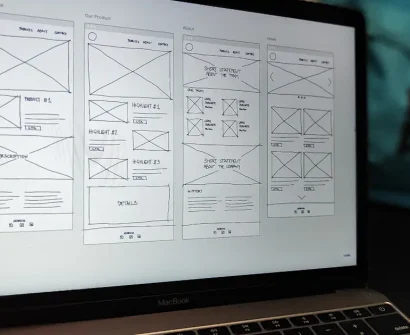
A sitemap is a list or diagram of the pages and how they relate. For many service businesses, a useful first version is:
- Home
- About
- Services
- Service A
- Service B
- Work, results or case studies
- Helpful articles
- Frequently asked questions
- Contact or application page
Do not create a page simply because other websites have one. Every page should answer an important question or support a visitor action.
WordPress distinguishes between time-based posts and more permanent pages. The official WordPress page documentation explains how pages work, while articles are normally created as posts. This separation helps you plan permanent business information differently from regularly published education content.
Use the three-click test
Ask whether a new visitor can reach the important information through a clear, short path. This is not a strict ranking rule. It is a practical usability check. Your primary action, core offer, contact information and proof should not be hidden in confusing menus.
Plan your homepage section by section
Your homepage should quickly answer: Where am I? Is this relevant to me? Why should I trust it? What should I do next?
1. Clear opening section
Use a specific headline, a short supporting explanation and the primary action. “Welcome to our website” wastes the most valuable space. A stronger headline identifies the outcome or audience.
2. Problem and promise
Show that you understand the visitor’s situation, then explain what your service or resource helps them do. Avoid guarantees you cannot support.
3. Main offers
Summarise the most important services or products. Give each a descriptive name and a short benefit. Link to dedicated pages only when the visitor needs more detail.
4. How it works
Reduce uncertainty with three to five steps. For example: complete the application, receive guidance, choose a suitable next step, then begin learning. Describe the real process accurately.
5. Proof and trust
Use genuine project examples, qualifications, business details, policies, client feedback or demonstrations. Label practice projects honestly. If you are still building proof, show your process and sample work rather than inventing clients.
6. Questions and objections
Answer practical questions about timing, location, payment, delivery, support or eligibility. Good FAQs remove hesitation; they should not repeat the sales copy.
7. Final action
End with one clear next step. The wording should tell the visitor what happens after clicking.
Prepare content before design
Designing with placeholder text often creates a layout that fails when real content arrives. Prepare the essentials first:
- Page titles and main headings
- Service descriptions
- Prices only when confirmed and intended to be public
- Contact details and opening hours
- Team names and accurate biographies
- Real photographs, logos and brand colours
- Policies, terms and delivery information where relevant
- Form questions and confirmation messages
- Proof, case studies and approved testimonials
For each page, write the visitor’s main question at the top of your notes. Then answer it in the first paragraph. Use descriptive subheadings so readers can scan. Google’s official guidance recommends creating helpful, reliable, people-first content rather than material produced mainly to manipulate search visibility; see Google Search Central’s people-first content guidance.
Plan mobile navigation and accessibility
Many visitors will first see your website on a phone. Plan for a narrow screen before adding decorative effects.
- Keep menu labels short and descriptive.
- Make buttons large enough to tap comfortably.
- Avoid placing essential information only inside images.
- Use strong colour contrast and readable text.
- Write meaningful alternative text for informative images.
- Give forms visible labels and helpful error messages.
- Break long text into headings, lists and short paragraphs.
- Test menus, links, forms and payment steps on an actual phone.
The WordPress Navigation block documentation describes how menus can be organised in supported block themes. Your exact controls may differ with your theme, but the planning principle is the same: the menu should reflect the visitor’s priorities.
Accessibility is not a final plugin you add after design. It begins with structure, contrast, language, keyboard-friendly controls and useful labels.
Prepare trust, conversion and measurement
A “conversion” is the meaningful action you want a visitor to complete. Before building, decide what you need to measure without collecting unnecessary personal information.
Possible measures include:
- Completed applications or contact forms
- Qualified quote requests
- Completed purchases
- Course enquiries
- Bookings
- Email subscriptions
- Visits to an important information page
Do not treat every page view as business success. Decide what a useful enquiry looks like and make the form ask only the questions needed for the next step.
Trust checklist
- Business name and contact route are consistent.
- Claims can be verified.
- Testimonials are genuine and approved.
- Forms explain why information is requested.
- Policies are easy to find where relevant.
- Links, buttons and confirmation messages work.
- The website uses secure HTTPS.
- Someone is responsible for updates and backups after launch.
Avoid common planning mistakes
- Starting with a theme: a beautiful template cannot decide your audience or offer.
- Copying a competitor: you may copy their weaknesses and lose your own positioning.
- Adding too many calls to action: visitors cannot tell which next step matters.
- Writing only about yourself: connect your experience to the visitor’s problem.
- Inventing content temporarily: fake results and placeholder testimonials can damage trust.
- Ignoring maintenance: every site needs ownership for updates, backups and content changes.
- Skipping mobile testing: a desktop design may create cramped text and broken forms on phones.
- Building pages without a journey: a page list is not enough; decide how visitors move from question to action.
Troubleshoot your plan
I have too many possible pages
Launch the smallest complete version that explains the offer, builds reasonable trust and supports the main action. Move optional pages into a later phase.
I do not have professional photographs
Use clean, honest photographs you own or properly licensed images that support the message. Do not use stock photos as fake evidence of your team, office or clients.
I am not sure what visitors want
Talk to five people who resemble your intended audience. Ask what they would need to know before applying, paying or making contact. Record their questions, not just their compliments.
My client keeps changing the scope
Return to the approved brief. Record new requests separately, explain their effect on time and cost, and agree on changes before building them.
I cannot write all the content
Draft one page at a time, starting with the core offer. Use interview questions to collect expertise from the owner, then edit the answers into clear visitor-focused language.
Your seven-day website planning sprint
- Day 1: choose the primary audience, main goal and visitor action.
- Day 2: complete the one-page website brief.
- Day 3: create the sitemap and visitor journey.
- Day 4: outline the homepage and most important service page.
- Day 5: collect text, images, proof, policies and contact information.
- Day 6: review mobile needs, accessibility, forms and measurement.
- Day 7: ask one intended user to review the plan and revise unclear parts.
After the sprint, you are ready to build or brief a designer. If you intend to offer website design professionally, our guide to building a WordPress portfolio that wins clients shows how to turn practice work into honest proof. You can also use the 30-day digital-skill decision guide if you are still choosing your learning path.
Frequently asked questions
Should I buy hosting before planning the website?
Not necessarily. First define the website’s functions and expected needs. That information helps you compare hosting more sensibly instead of buying only from a promotion.
How many pages should a beginner website have?
There is no fixed number. Use enough pages to explain the offer, answer important questions, provide trust and support the main action. A focused small website is better than many unfinished pages.
Do I need to know coding to plan a WordPress website?
No. Planning is mainly about the audience, business goal, information, structure and visitor journey. Technical knowledge becomes useful during implementation and maintenance.
Should every service have its own page?
Create a separate page when the service has distinct questions, search intent, examples or a different action. Closely related simple services may work on one well-organised page.
Can I change the plan later?
Yes. A plan is a decision tool, not a prison. Record why a change is needed, what it affects and who approves it. Avoid untracked changes during the build.
Not sure which learning path fits you?
Tell Ziflite Academy about your current situation, skill level, goals, obstacles and preferred way to learn. Your answers help the academy understand where you are and guide you toward a suitable way to learn and grow.
Featured photo by Microsoft 365 on Unsplash.