Currently Empty: ₦0.00


By the end of this guide, you will be able to turn a client conversation into a clear website proposal that explains the problem, the solution, the work included, the timeline, and the next step. You will also get a copy-and-edit template you can use for your next WordPress enquiry.
A good proposal does not need impressive grammar or fifty pages. It needs to remove uncertainty. The client should understand what you will build, why it matters, what you need from them, what is outside the agreement, and how to begin.
Key Takeaways
- Run a short discovery conversation before defining the project.
- State deliverables, exclusions, responsibilities, revisions and payment stages clearly.
- Connect every technical decision to the client’s business goal.
- Finish with one precise approval and payment process.
What you need before writing the proposal
- The client’s correct name and business name.
- A short discovery conversation or completed questionnaire.
- The main business goal for the website.
- A realistic list of pages and features.
- Your working process and availability.
- Your payment structure and preferred method.
- A proposal expiry date or decision deadline.
If you do not yet have strong work to share, first use this guide to build a WordPress portfolio that wins clients. If you are still searching for a suitable prospect, follow the 30-day first-client action plan.
Step 1: Run a short discovery conversation
Do not write a proposal immediately after someone says, “I need a website.” The same sentence could mean a one-page information site, a booking website, an online shop, a membership platform, or a redesign. Ask enough questions to understand the real need.
Discovery questions:
- What does your business offer, and who is the ideal customer?
- What should a visitor do on the website: call, book, buy, apply, register, or visit a location?
- Do you already have a website? What is not working?
- Which pages do you believe you need?
- Do you have your logo, text, photographs, product details, and policies?
- Are there examples of websites you like, and what specifically do you like about them?
- Does the website need payments, bookings, forms, accounts, courses, or other special functions?
- Who will approve the work?
- When would you like to launch, and is there an event driving that date?
- Who will maintain the website after launch?
Ask the client to describe the outcome in business language. “I want something beautiful” is less useful than “I want customers to view my catering packages and send an order enquiry.”
Step 2: Write the client’s problem in plain language
Begin the proposal by showing that you listened. Do not lead with your biography or a long list of tools. Summarise the current situation and the desired outcome.
Example for a Nigerian service business:
Your business currently receives enquiries mainly through Instagram and WhatsApp. New customers often ask the same questions about services, location, availability, and how to begin. You need a professional website that presents this information clearly and guides suitable visitors to request a consultation.
Example for an international consultant:
Your existing website explains your background but does not give visitors a clear route from interest to booking. The proposed redesign will organise your services, strengthen proof, and make the discovery-call action visible across mobile and desktop pages.
Do not promise revenue, rankings, or conversion increases unless you have a valid basis, measurement plan, and control over the factors involved.
Step 3: Present the solution as an outcome
Now explain what you recommend and why. Keep the description tied to the client’s goal.
Weak: “I will use WordPress, a theme, plugins, CSS, and Elementor.”
Stronger: “I will create a mobile-friendly WordPress website that explains your three main services, answers common questions, presents proof of your work, and directs visitors to a focused enquiry form.”
The second version tells the client what the website will help them do. You can list the technology later when it affects ownership, editing, or maintenance.
Step 4: Define exactly what is included
This section protects both you and the client. List deliverables in simple language.
Example scope:
- Planning and page structure.
- Up to five pages: Home, About, Services, Work, and Contact.
- Responsive layout for common phone, tablet, and desktop screen sizes.
- Contact form linked to the client’s approved email address.
- WhatsApp contact button.
- Upload of client-supplied text and approved images.
- Basic page titles, headings, descriptive links, and image alternative text.
- Connection of the client’s existing domain and hosting, if access is provided.
- One recorded handover session or written editing guide.
- A stated number of revision rounds.
Use words such as “up to five pages” instead of “small website.” Specific language prevents two people from interpreting the same agreement differently.
Step 5: State what is not included
A professional proposal also sets boundaries. Common exclusions include:
- Logo design or brand identity unless listed.
- Professional copywriting or photography unless listed.
- Paid stock images, premium plugins, hosting, domain renewal, or third-party subscriptions.
- Product entry beyond an agreed number.
- Custom software development.
- Ongoing SEO, advertising, social-media management, or email marketing.
- Unlimited changes.
- Legal policies written on behalf of the client.
- Maintenance after the agreed support period.
You are not being difficult by stating exclusions. You are making it easier to quote additional work fairly when the client requests something new.
Step 6: Explain content responsibilities
Many website projects slow down because nobody knows who supplies the content. State:
- Who provides the logo, photographs, text, product information, and policies.
- The file formats you accept.
- When content must be delivered.
- Whether you will edit supplied text for clarity.
- What happens if the content arrives late.
If you will create content, describe the number of pages, interviews, revision rounds, and approval process. Google’s current guidance emphasises helpful, reliable, people-first content, so avoid offering mass-produced filler simply to make a website appear larger.
Step 7: Build a realistic timeline
Break the project into stages instead of promising one vague completion date.
Example sequence:
- Project setup: agreement, initial payment, access, and content checklist.
- Structure: sitemap and homepage direction.
- Build: approved pages and functionality.
- Review: client feedback collected in one place.
- Revision: agreed changes.
- Testing: mobile layout, forms, links, content, and basic accessibility checks.
- Launch: final approval, backup, and go-live steps.
- Handover: access, instructions, and maintenance options.
Clarify that the timeline depends on prompt feedback, complete content, required access, and payments. If the client delays approval, the launch date may need to move.
Step 8: Describe quality and launch checks
Your proposal should show that “finished” means more than a page that looks attractive.
Pre-launch checklist:
- All agreed pages are present.
- Headings, spelling, phone numbers, and contact details are correct.
- Forms reach the approved recipient.
- Buttons and links work.
- The site is checked on mobile and desktop.
- Images are compressed and have suitable text alternatives.
- Basic keyboard navigation and readable contrast are reviewed.
- Administrator access is controlled.
- A backup exists before major updates or launch changes.
- The client approves the final version.
The W3C recommends considering accessibility throughout the web-production process, not only at the end. WordPress also advises creating a backup before updating. These are useful responsibilities to include in your workflow rather than leaving them unspoken.
Step 9: Set a clear revision process
Replace “unlimited revisions” with a defined feedback method.
A practical clause could say:
The project includes two revision rounds covering changes within the agreed scope. Feedback should be combined into one document or message per round. New pages, features, or major changes to an approved direction will be quoted separately.
Explain what a revision round means. One round is a collected set of changes submitted together, not one WhatsApp message.
Step 10: Present the investment clearly
State the total project fee, currency, payment stages, taxes where applicable, and which third-party costs are separate. Do not hide necessary expenses in small print.
Common payment structures include:
- An initial payment to reserve the project, with the balance due before launch.
- Payments linked to agreed milestones.
- A full upfront payment for a small, tightly defined service.
Choose a structure that suits the project and your local requirements. Confirm the method for invoices or receipts. If cancellation, refunds, intellectual property, liability, or dispute terms matter, use a separate contract reviewed for your jurisdiction; a proposal template is not legal advice.
Step 11: Include ownership, access, and maintenance
Tell the client what happens after launch:
- Who owns the approved website design and supplied content after final payment.
- Who owns the domain and hosting accounts.
- Which software licences belong to the client and which remain yours.
- Which administrator accounts will be handed over.
- How long post-launch support lasts.
- What maintenance covers and how it is charged.
Use the least access required when adding people to WordPress. The platform provides different roles and capabilities; not every person who edits content needs full administrator control.
Step 12: End with one simple next step
Do not end with “Let me know what you think.” State exactly how to proceed.
To begin, reply with your approval, sign the accompanying agreement, and make the initial payment using the invoice details. Once these are received, I will send the content-and-access checklist and confirm the project start date.
Add your proposal’s validity period so an old quote does not remain open indefinitely.
Copy-and-edit website proposal template
Prepared for: [Client name and business]
Prepared by: [Your name/business]
Date: [Date]
Valid until: [Date]1. Project overview
[Summarise the client’s current situation, audience, and desired outcome.]2. Recommended solution
[Explain the website you recommend and how it supports the business goal.]3. Deliverables
[List pages, functions, responsive design, content tasks, integrations, revisions, testing, and handover.]4. Not included
[List excluded services, third-party charges, and limits.]5. Client responsibilities
[List content, access, approvals, feedback, and payment responsibilities.]6. Project stages
[Setup → structure → build → review → revisions → testing → launch → handover.]7. Investment
[Total, currency, payment schedule, and separate third-party expenses.]8. Revisions and additional work
[Number of rounds and how out-of-scope work is handled.]9. Launch and support
[Approval process, handover, support period, and maintenance option.]10. Next step
[Approval, agreement, initial payment, and confirmed start date.]
Common proposal mistakes
- Quoting before discovery: you may price the wrong project.
- Listing tools instead of outcomes: the client may not understand the value.
- Using vague deliverables: “complete website” creates different expectations.
- Forgetting exclusions: every new request feels included.
- Promising an unrealistic launch date: rushed work creates avoidable problems.
- Offering unlimited revisions: approval may never arrive.
- Ignoring content delays: the project stalls while your schedule remains blocked.
- Sending without proofreading: incorrect names and figures reduce trust.
- Using fake case studies or results: honesty is more sustainable.
Troubleshooting
The client says the proposal is too expensive
Do not immediately reduce the fee. Ask which part does not fit the budget. Offer a smaller phase with fewer pages or features while protecting the essential outcome. Reduce scope, not clarity.
The client keeps adding features
Refer to the agreed deliverables and create a separate estimate for the new request. Explain the effect on cost and timeline before beginning it.
The client has not supplied content
Resend the content checklist with a new realistic milestone. Do not fill important business information with invented text. If appropriate, offer a separately defined content service.
The client wants administrator access during the build
Agree on safe access and change-management rules. Explain that conflicting edits can delay the work. Use suitable WordPress roles and keep backups before major changes.
Your 24-hour action plan
- Copy the proposal template into your preferred document tool.
- Add your business name, contact details, working process, and standard exclusions.
- Create a reusable discovery questionnaire.
- Choose one previous or practice project and write a sample project summary.
- Review your revision, payment, handover, and maintenance language.
- Proofread the template on a phone and laptop.
- Use it for the next qualified enquiry instead of writing from scratch.
Not sure which learning path fits you?
Tell Ziflite Academy about your current skill level, goals and biggest challenge. Your answers will help the academy understand where you are now and guide you toward a suitable way to learn, build and grow.
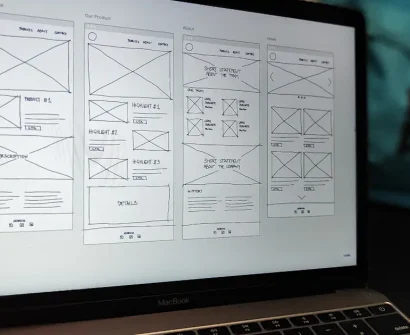
Featured photo by Davide Baraldi on Unsplash.