Currently Empty: ₦0.00


By the end of this guide, you will have a clear plan for building a simple WordPress portfolio that shows what you can do, gives potential clients confidence, and makes it easy for them to contact you. You do not need years of experience, expensive equipment, or ten completed client projects. You need a focused offer, two or three believable samples, and a website that answers the questions a serious client will ask.
A portfolio is not merely an online gallery. It is your quiet salesperson. When someone receives your WhatsApp message, sees your social-media post, or hears about you from a friend, your portfolio should help them understand your skill and decide on the next step.
Key Takeaways
- Choose one clear WordPress service and make the portfolio support that offer.
- Two or three honestly labelled concept projects can demonstrate your thinking.
- Explain the goal, audience and decisions behind each project instead of showing screenshots alone.
- Test the portfolio on mobile and make the contact action easy to find.
What you need before you start
- A WordPress website or a safe practice installation.
- Your name or business name and a professional photograph or simple logo.
- One service you want to sell first.
- Two or three website samples. Practice projects are acceptable when you label them honestly.
- An email address, WhatsApp number, or contact form clients can use.
- About two focused hours for the first version. Improve it later rather than waiting for perfection.
If you are still learning the basics, start with this beginner guide to creating a website without coding. WordPress also provides official instructions for creating pages and using the block editor.
Step 1: Choose one clear service
A beginner portfolio becomes confusing when it tries to sell every digital service at once. Pick one primary service and make everything on the page support it. You can add other services later.
Examples of focused offers include:
- Five-page WordPress websites for local service businesses.
- Mobile-friendly landing pages for coaches and course creators.
- Simple online shops for fashion, beauty, food, or gift businesses.
- Website redesigns for businesses whose current sites look outdated.
- Monthly WordPress maintenance for small organisations.
Use this sentence template:
I help [type of client] achieve [useful result] by building [specific type of website].
For example: “I help Nigerian beauty businesses turn Instagram visitors into enquiries by building fast, mobile-friendly WordPress websites.” A global version might be: “I build clear WordPress landing pages for independent consultants who need more qualified discovery calls.”
Step 2: Plan a portfolio that answers six client questions
Your portfolio can begin as one strong page. It should answer:
- Who are you?
- Who do you help?
- What can you build?
- What proof can you show?
- How will the project work?
- How can the client contact you?
A simple page structure is enough:
- Hero section with your promise and one contact button.
- Services section with one primary offer and up to two supporting services.
- Portfolio section with two or three case studies.
- Process section explaining the next steps.
- About section that builds trust.
- Contact section with a short form, email, or WhatsApp link.
Keep the navigation short: Home, Work, Services, About, and Contact. WordPress documents how its Navigation block can control both the structure and design of a menu on compatible themes.
Step 3: Write a hero section that speaks to a client
The first screen should not begin with “Welcome to my website.” State who you help, the result you create, and what the visitor should do next.
Hero template:
Headline: WordPress websites that help local businesses look credible and win more enquiries.
Supporting line: I design clear, mobile-friendly websites for service businesses that need a professional online presence without unnecessary complexity.
Button: Discuss Your Website
Use one strong button instead of several competing actions. Link it to your contact form or a pre-written WhatsApp message such as: “Hello, I saw your portfolio and would like to discuss a website for my business.”
Step 4: Create samples even if you have no clients yet
You can demonstrate ability without pretending that practice work was paid client work. Choose realistic businesses and create concept projects.
Good practice-project ideas include:
- A one-page website for a Lagos caterer.
- A booking website concept for an Abuja beauty studio.
- A landing page for an online tutor.
- A simple shop for a handmade-product brand.
- A professional homepage for a consultant serving international clients.
Build each sample around a business problem rather than decoration. For a caterer, make the menu easy to browse and the order button easy to find. For a consultant, highlight expertise and give visitors a clear booking route. For an online shop, make products and delivery information obvious.
Label each unpaid example “Concept Project” or “Practice Project.” Honesty builds more trust than an invented testimonial.
Step 5: Turn each sample into a mini case study
A screenshot alone does not reveal how you think. Give every project a short explanation using this structure:
- The goal: What did the business need?
- The audience: Who should the website serve?
- Your decisions: What layout, content, or mobile choices did you make?
- The deliverable: What pages or features did you create?
- The next step: Invite the visitor to view the project or request something similar.
Example: “This concept website was designed for a small food business receiving most enquiries on mobile. I created a short homepage, organised the menu into clear categories, placed delivery information near the ordering section, and added a visible WhatsApp call to action. The goal was to reduce repeated questions and make ordering easier.”
Do not claim sales increases or search rankings you did not measure. Describe your decisions and the intended outcome.
Step 6: Make your portfolio easy to trust
Trust comes from clarity and consistency. Add:
- Your real name or business identity.
- A short explanation of how you work.
- A professional email address where available.
- Your location and whether you work remotely.
- Real testimonials only, with permission.
- A clear privacy statement if your form collects personal information.
- Accurate project labels and working links.
Your About section does not need your life story. Try: “I am a WordPress website designer focused on helping small businesses present their services clearly online. I combine simple design, mobile usability, and practical business thinking. I work with clients in Nigeria and remotely.”
Step 7: Improve the mobile experience
Many prospects will open your link from WhatsApp or social media on a phone. Check the page yourself on a small screen.
Mobile checklist:
- The headline is readable without zooming.
- Buttons are easy to tap and use clear labels.
- Images fit the screen and load quickly.
- Paragraphs are short enough to scan.
- The menu opens and every link works.
- The contact form is short and usable.
- No text overlaps an image or disappears.
Compress portfolio images before uploading them. Use descriptive alternative text when an image communicates information; the W3C alt-text decision tree explains when to describe an image and when an empty alt attribute is more appropriate.
Step 8: Use clear titles, links, and calls to action
Name projects in a way a visitor understands: “Restaurant Website Concept” is clearer than “Project One.” Google recommends clear, descriptive page titles and headings, while descriptive link text helps both visitors and search systems understand the destination. See Google’s guidance on title links and descriptive links.
Useful calls to action include:
- Request a Website Quote
- Discuss Your Project on WhatsApp
- View the Full Case Study
- Book a Discovery Conversation
Avoid vague labels such as “Submit” or “Click Here” when a more meaningful phrase is possible.
Step 9: Create a simple client enquiry process
Ask only for the information you need to begin:
- Name
- Business or organisation
- Type of website needed
- Main goal
- Desired launch period
- Preferred contact method
Do not force a beginner client to write a technical specification. Your job is to turn their business goal into a suitable website plan.
After the form is submitted, send a short confirmation explaining when you will reply and what happens next. If you use WhatsApp, prepare two or three questions before the conversation so you do not improvise the entire discovery process.
A one-page portfolio copy template
Headline: I build [type of website] for [type of client].
Promise: Get a clear, mobile-friendly website that helps visitors [desired action].
Services: Website design, landing pages, and ongoing maintenance.
Work: View selected concept and client projects, with the goal and design decisions behind each one.
Process: Discovery → content plan → design → review → launch.
About: Two or three sentences about your focus, working style, and location.
CTA: Tell me about your website.
Common mistakes to avoid
- Waiting for paid clients before creating proof: build honest concept projects now.
- Showing too many weak samples: two strong, explained projects are better than ten unfinished ones.
- Making the portfolio about software: clients care more about their business result than your plugin list.
- Using fake testimonials: replace them with your process, sample work, and honest labels.
- Hiding contact details: place a contact action near the top and again at the end.
- Ignoring mobile visitors: test every section on a real phone.
- Copying another designer’s wording: use your own offer, voice, and examples.
Troubleshooting
“My portfolio looks empty.”
Add two concept projects and explain the business goal behind each. Use device mockups sparingly; the case-study text is what proves your thinking.
“I do not know what niche to choose.”
Start with businesses you already understand or can reach. Choose one niche for the portfolio message, test it through outreach, and adjust based on real conversations.
“The page looks good on desktop but poor on mobile.”
Reduce oversized headings, stack columns, shorten paragraphs, compress images, and check spacing around buttons. Test again after clearing any website cache.
“Visitors view the portfolio but do not contact me.”
Strengthen the offer, show a clear process, add proof, and make the call to action specific. Ask a trusted business owner to review the page and tell you what remains unclear.
Your seven-day action plan
- Day 1: Choose one client type and write your offer sentence.
- Day 2: Plan your one-page structure and gather your identity details.
- Day 3: Build or improve your first concept project.
- Day 4: Create the second sample and write both mini case studies.
- Day 5: build the portfolio page in WordPress.
- Day 6: test mobile layout, links, forms, spelling, and image sizes.
- Day 7: send the portfolio to five suitable prospects or people who can give useful feedback.
When you are ready to look for paying work, follow the 30-day plan for getting your first web design client in Nigeria. You can also explore three practical ways to earn as a WordPress website designer.
Frequently asked questions
Can I create a portfolio before I finish learning WordPress?
Yes. Build a small version that reflects your current ability, label practice work honestly, and update it as your skills improve.
Do I need a separate website for every service?
No. Begin with one focused portfolio and one main offer. Create separate service pages only when you have enough useful content for each service.
Should I display prices?
You may show a starting package if your scope is standard, or invite prospects to request a quote if projects vary. Whichever approach you choose, explain what is included and what could change the scope.
How many projects should a beginner show?
Two or three well-explained projects are enough for a strong first version. Quality, relevance, and honest context matter more than volume.
Not sure which learning path fits you?
Tell Ziflite Academy about your current skill level, goals and biggest challenge. Your answers will help the academy understand where you are now and guide you toward a suitable way to learn, build and grow.
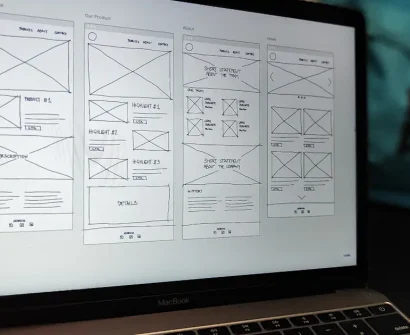
Featured photo by Sheraz Abdul Ghafoor on Unsplash.