Currently Empty: ₦0.00

Getting your first web design client can feel harder than learning how to build the website itself. The good news is that you do not need a large audience, expensive ads, or years of experience to start.
This guide shows you a simple, practical system you can use in Nigeria to find your first client, present your offer clearly, and move from conversation to payment.
Table of Contents
- 1. Choose one clear service to sell
- 2. Build proof before looking for clients
- 3. Find businesses that already need help
- 4. Send simple personalised outreach
- 5. Make your first offer easy to buy
- 6. Build trust before asking for payment
- 7. Deliver well and ask for referrals
- A 7-day action plan
1. Choose one clear service to sell
Do not start by telling people that you can build every type of website. A beginner usually gets better results with one simple offer for one type of customer.
For example, you could offer a clean 5-page business website for barbers, restaurants, fashion brands, schools, consultants, churches, or small service businesses.
Your offer should answer three questions quickly: what you will build, who it is for, and what business problem it solves.
A better message is: “I build simple mobile-friendly websites for small businesses that want to look more professional and turn visitors into enquiries.”
2. Build proof before looking for clients
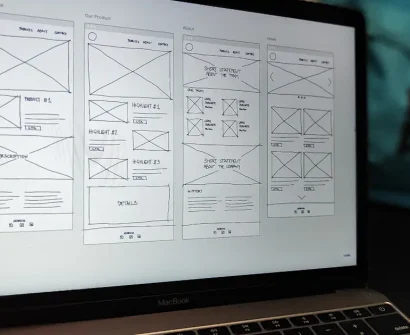
You do not need a paid client before you can create proof. Build one or two demonstration websites for imaginary businesses or redesign the homepage of a real business as a concept.
Your sample should show that you understand the basics: a strong headline, clear services, contact information, mobile responsiveness, WhatsApp or enquiry buttons, and a professional visual structure.
Take screenshots and place them in a simple portfolio page. The goal is not to look like a huge agency. The goal is to make a potential client comfortable enough to continue the conversation.
3. Find businesses that already need help
Start close to the market. Search Instagram, Google Maps, Facebook, WhatsApp business communities, and your local area for businesses with one of these problems:
- No website at all.
- An outdated or broken website.
- No clear contact or enquiry process.
- A social media page doing all the work of a proper business website.
- A website that looks poor on mobile.
Create a small prospect list instead of sending random messages to hundreds of people. Twenty relevant businesses are more useful than two hundred unrelated contacts.
4. Send simple personalised outreach
Your first message should not sound like spam. Mention something specific about the business and keep the message short.
You can say that you noticed their business, saw an opportunity to improve how customers find information or contact them online, and ask whether they would like to see a quick idea.
The key is to begin a conversation rather than immediately forcing a sale.
5. Make your first offer easy to buy
When someone shows interest, avoid giving a confusing list of features. Present a clear package with a defined result, timeline, what is included, and the price.
For an early project, you can keep the scope controlled. For example: homepage, about page, services page, contact page, mobile optimisation, WhatsApp button, and basic setup.
Do not promise unlimited revisions or services you cannot confidently deliver. A small project delivered properly is more valuable than a large project that becomes difficult to complete.
6. Build trust before asking for payment
People often hesitate because they are unsure whether a beginner will actually finish the work. Reduce that fear by explaining your process.
Tell the client what happens after payment, what information you need from them, when they will see the first version, how feedback will work, and what happens before launch.
A professional process can make a beginner look far more reliable.
7. Deliver well and ask for referrals
Your first client is more than one project. It can become a testimonial, portfolio example, maintenance customer, referral source, and proof that helps you close the next client faster.
After delivering the website, ask the client for a short testimonial and permission to showcase the work. You can also ask whether they know one or two business owners who may need a similar website.
A Simple 7-Day Action Plan
- Day 1: Choose one type of business and define one website offer.
- Day 2: Build or improve one strong demo website.
- Day 3: Create a simple portfolio page and screenshots.
- Day 4: Find 20 relevant businesses.
- Day 5: Contact the first 10 with personalised messages.
- Day 6: Contact the next 10 and follow up with interested prospects.
- Day 7: Review your responses, improve your message, and repeat the process.
What to Learn Next
If you want to turn web design and other digital skills into practical income opportunities, the next step is structured learning and consistent practice.
AKUX Academy is designed to help beginners build practical digital skills and move from learning to real-world application.
Frequently Asked Questions
Can I get web design clients without running ads?
Yes. Direct outreach, referrals, local networking, social media, and portfolio-driven prospecting can all help you get clients without paid ads.
Do I need many websites in my portfolio?
No. One or two strong, relevant examples are enough to begin conversations with potential clients.
Should I work for free to get experience?
Not necessarily. A self-created demo project can show your ability without requiring you to complete full client work for free.
What should I focus on after getting my first client?
Deliver the project well, collect a testimonial, request referrals, and document the project so it becomes proof for your next sale.